’28 Years Later: The Bone Temple’ Review: A Bold Sequel That Expands The Universe
The British infected saga returns with an installment that expands its universe, deepens its mythology, and continues the legacy started by Danny Boyle and Alex Garland.
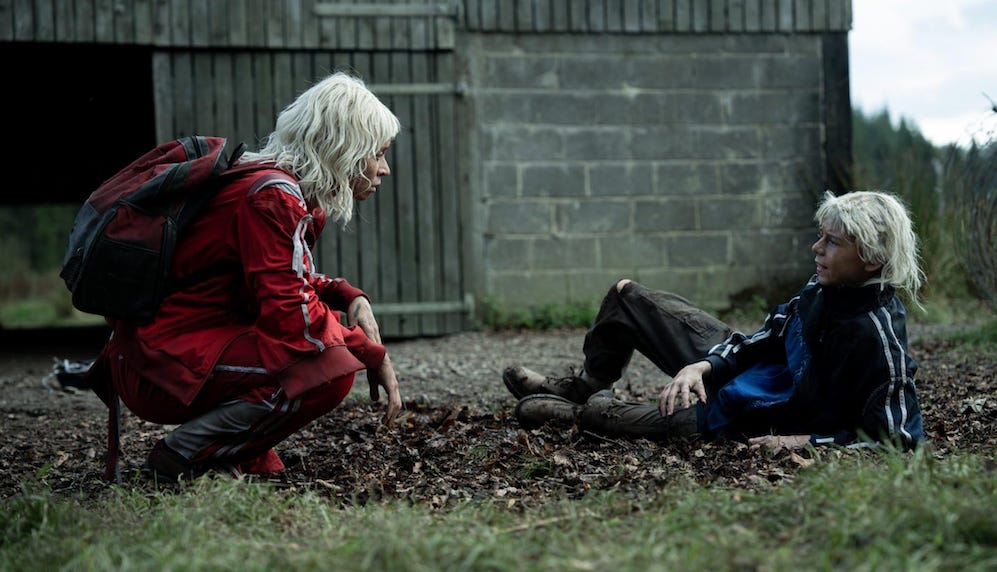
Expanding the world built in 28 Years Later: The Evolution, 28 Years Later: The Bone Temple follows two parallel stories. Dr. Kelson, played by Ralph Fiennes, begins an unexpected friendship with an alpha infected that challenges everything known about the virus. At the same time, Spike, played by Alfie Williams, falls under the control of the violent Jimmy Crystal, played by Jack O Connell, dragging him into a nightmare of survival. In this new chapter of the saga directed by Nia DaCosta, known for Candyman, the threat no longer comes only from the infected. Human cruelty can be even more terrifying.
The 28 Years Later franchise continues expanding its universe with a film that picks up the story exactly where the previous installment ended. Far from repeating itself, The Bone Temple finds its own identity by splitting its narrative into two parallel stories. One focuses on Dr. Kelson’s scientific exploration with an alpha zombie he names Sansom. The other follows Spike’s descent into human violence through the unhinged leadership of Jimmy Crystal. This dual structure allows the mythology of the saga to expand without losing its thematic foundations.
The previous film was a box office success, although it divided opinions because of its more introspective tone instead of the classic zombie story general audiences are used to. This new installment uses that discussion to its advantage and achieves a stronger balance between reflection, sustained tension, and action sequences. It brings back classic elements of the saga, such as its frantic pace, visceral terror, and the human savagery that emerges from the madness triggered by this apocalypse.
One striking detail is that this movie is being released almost one year after The Evolution, something quite uncommon in modern franchises. Instead of feeling rushed, this temporal continuity strengthens the emotional impact of the story and reinforces the sense of a living universe. Kelson once again stands out as one of the most complex characters of the franchise. Ralph Fiennes delivers an excellent performance, and it is clear he genuinely enjoyed the role, taking the character into increasingly unsettling territory through his connection with an alpha infected that may hold the key to a possible cure.
Spike’s storyline works as a counterpoint. It is a direct descent into human barbarism. Jimmy Crystal becomes the embodiment of the brutality that emerges when society collapses. Manipulation, violence, and abuse of power shape this arc, highlighting one of the central ideas of the saga. Even in a world overrun by monsters, the worst ones are sometimes human.
|Te podría interesar: ‘Song Sung Blue’ Review: a musical starring Hugh Jackman and Kate Hudson
The audience can anticipate that both stories will eventually converge, and that is exactly what happens. The climax is surprisingly different from what the genre usually offers. The resolution is not a massive battle against hordes of infected. Instead, it is a strategic confrontation built on ingenuity, surprise, and psychological tension. Although the ending approaches eccentricity in concept, the execution is so precise and visually powerful that it becomes fully effective.
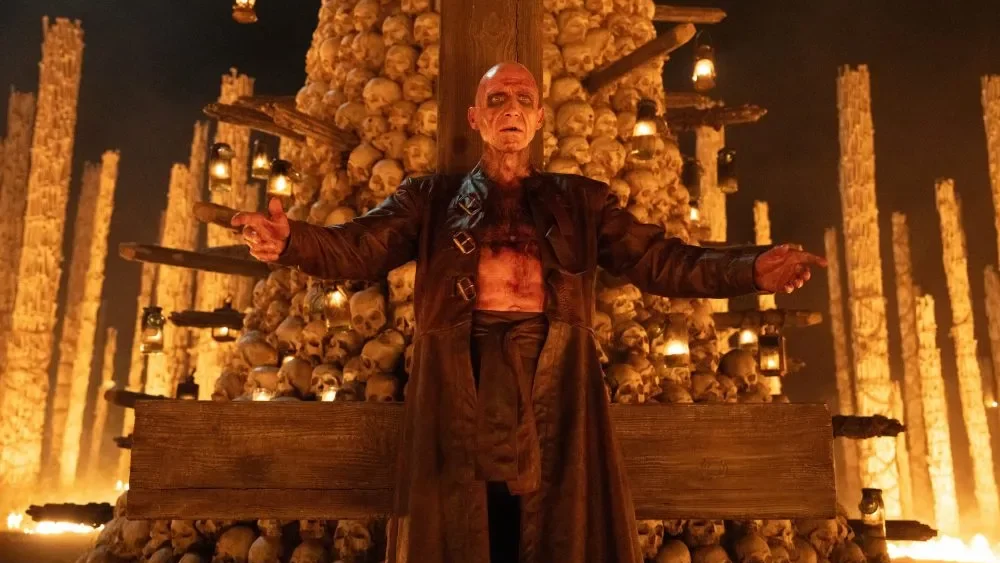
Nia DaCosta demonstrates remarkable confidence behind the camera. She respects the language that Danny Boyle established more than two decades ago, with frantic camerawork, raw textures, and devastated environments, while adding her own intimate and emotional sensibility. The staging, sound design, and suspense work make this one of the strongest entries in technical terms.
The film also works clearly as a bridge toward a future conclusion of the saga. It expands the mythology of the infected, introduces new possibilities for the evolution of the virus, and deepens the boundaries between the human and the posthuman. All of this is reinforced by the final cameo from Cillian Murphy, the protagonist of the original 28 Days Later. In a scene that serves as a powerful nod for fans, we see him in the house where he lived at the end of the first movie. The big surprise is that he is now with his daughter, to whom he is giving a small lesson. At the end of the scene, he spots the protagonists being chased by zombies through his binoculars and decides to leave to help them, leaving the door open for the next installment of the saga.
This return does not only excite fans. It promises an epic finale that unifies the three eras of 28 Years Later, connecting the classic protagonists with the new ones and preparing the ground for an ambitious conclusion, if the commercial performance of this installment allows it.
28 Years Later: The Bone Temple maintains the narrative and visual strength of its predecessor, deepens the mythology of the universe, and finds new ways to explore the relationship between humanity and infection. It respects the spirit of the saga and is not afraid to take risks, paving the way for what could be a historic conclusion for the series. The return of Cillian Murphy reinforces this direction and ignites major expectations for the next chapter.
Our rating of 28 Years Later: The Bone Temple
4/5 = Very good
Technical information
- 28 Years Later The Bone Temple (2026)
- Directed by Nia DaCosta
- Written by Alex Garland
- Cast Ralph Fiennes, Jack O Connell, Alfie Williams, Erin Kellyman, Chi Lewis Parry
- Cinematography by Sean Bobbitt
- Edited by Jake Roberts
- Music by Hildur Gudnadottir
- Running time 109 minutes